News
-
 Just NowNashik: Maharashtra’s highest ROI property market
Nashik has better potential for property price appreciation than any other tier-2 or tier-3 city in Maharashtra, owing to its growth and expanding economic opportunities, says Hardik Puranik, a local property broker. This feeling is echoed by most of the real estate analysts, who vouch that Nashik will be the next growth corridor of Maharashtra. There are many factors that work in Nashik’s favour. “With a price range of Rs 2,700-3,800 per sq ft, Nashik holds tremendous potential for sizeable appreciation. Even the best properties in Nashik, are below Rs 5,000 per sq ft,” Puranik explains. Nashik is the third-largest district in Maharashtra, covering 15,530 sq kms in the Khandesh region. More importantly, it is already a predominantly urban region and has moved away from being just a pilgrimage destination. Nashik is also attracting property seekers from neighbouring cities like Pune and Mumbai, owing to the growth of its physical and social infrastructure and its pleasant climate. Preferred destination Nashik city, which is nestled at the foothills of the Western Ghats, on the banks of the river Godavari, it is also a preferred retirement destination in Maharashtra. At 700 metres (2,300 ft) above sea level, it is one of the highest cities, not only in Maharashtra but across the country. Although the city has a low population density, analysts feel that the urban landscape may change soon, as people migrate for economic opportunities. Increasing industrialisation and an expanding IT sector, have ensured there is no dearth of economic activity. Nashik is cited to be fourth-fastest growing city in the country. With job opportunities in every field, Nashik has attracted skilled, as well as unskilled professionals. There is a significant expat population in the industrial sectors, along Ozad, Ambad, Sinnar and Satpur. These factors have boosted the demand for housing in the city. What drives Nashik’s realty demand? Nashik has also attracted second home buyers, as the city has offered sizeable returns in the range of 15% to 25% in the last two to three years. Moreover, developments along the commercial belt and the presence of many educational institutions, are changing this market from an investor-driven one to an end-user one. See also: Nashik: Social infrastructure and lifestyle Manju Yagnik, vice-chairperson of the Nahar Group, feels that the growth in tier-2 cities like Nashik, can be attributed to the increasing disposable incomes of the people and companies looking for new markets for growth. This growth has also been helped by reasonable real estate prices and a conducive business environment created by the state and local governments. “The credit for rapid urbanisation in Nashik goes to skill-based manufacturing industries, like automotive, consumer and capital goods, engineering, textiles, pharmaceutical sectors like bio-technology and IT/ITeS,” says Yagnik. Nashik is among the 10 cities from Maharashtra, selected for development as smart cities. This is likely to further boost infrastructure development and fuel the growth of industries, thereby changing the economic and real estate landscape. To join a discussion thread on properties in Nashik, click here. Why Nashik’s property market is a safe bet Nashik is the fourth-fastest growing city in India. Nashik is among the 10 cities from Maharashtra, selected for development as smart cities. The housing market in Nashik is strong, owing to multiple demand drivers and a large expat workforce in the skilled and unskilled sectors. (The writer is CEO, Track2Realty)
Source- Maharashtra Times , 2015 -
Just Nowरिअल , इस्टेट क्षेत्रातील सर्वोत्तम दुसरे शहर हे नाशिक
रिअल , इस्टेट क्षेत्रातील सर्वोत्तम दुसरे शहर हे नाशिक ठरले आहे देशपातळीवरील १९ टायर टु सिटीच्या करण्यात आलेल्या पाहणीत कोचीने पहिले तर नाशिक ने दुसरे स्थान पटकावल्याचे निदर्शनास आले आहे घरांची मागणी पुरवठा दर्जा आणी इतर बाबींच्या आधारे हे सर्वर्क्षण करण्यात आले आहे या निमित्ताने नाशिकच्या शिरपेचात मनाचा तुरा रोवला गेला आहे सेकंड होमे डेस्टीनेशन असल्याचे यापूर्वी अनेकदा सांगण्यात आले आहे , मुंबई पुण्यासह अन्य शहरातील नागरिक वास्तव्य करण्यास इच्छुक आहेत खास करून सेवानिवृत्त होऊन नाशकात स्थायिक होण्याचे प्रमाण जास्त आहे , आता एका सर्वेक्षणात नमूद करण्यात आले आहे प्रत्येक शहरातील रिअल इस्टेट मोहर उमटली आहे. रिअल इस्टेट क्षेत्रात ऑनलाइन कार्यरत असलेल्या एका मोठ्या संस्थेने देशात्तील एकून १९ टायर २ शहरांचे सर्वेक्षण पूर्ण केले त्यात कोची हे पहिल्या क्रमांकावर आहे , टायर २ शहरांमधील रिअल इस्टेट मध्ये एकून ३२ हजार ६०० कोटी रुपयांची उलाढाल होत असल्याचे सर्वेक्षणात नमूद करण्यात आले आहे. .प्रत्येक शहरातील रिअल इस्टेट खरेदी विक्री ,घरांच्या किमती मागणी पुरवठा विक्री न झालेली घरे नवीन प्रकल्पांचा ट्रेंड अशा विविध निकषांच अभ्यास करण्यात आला आहे दुसर्या क्रमांकावर नाशिक असून त्यानंतर विशाखापट्टनम, बडोदा , त्रिवेंद्रम ,जयपूर ,मंगळूर ,इन्दोर, गोवा आणि कोइम्ब्तुर चा समावेश आहे. "स्वच्छ, सुंदर ,सुरक्षित आणि आल्हाददायक हवामान हि नाशिक ची बलस्थाने आहेत त्याच बरोबर दर्जेदार घराचं पुरवठा व ग्राहकांचा विश्वास या जोरावर येत्या काळात नाशिक नक्कीच पहिल्या क्रमांकावर जाईल " जयेश ठक्कर अध्यक्ष :क्रेडई ,नाशिक
Source- Maharashtra Times , 2015 -
 Just NowNashik youngsters make it big on the silver screen, no languages barred
Gearing up for the Kumbh Meal, Nashik’s residential sector is witnessing a major face-lift. Initiatives taken by the Maharashtra government to rapidly develop infrastructure here have pushed the housing demand even further. The sanction of INR 2,380 crores towards creating a more stable social infrastructure has resulted in a flurry of construction activity. Both national and local real estate developers are purchasing residential land in Nashik in large parcels to come up with extraordinary capital ventures.
The sea-change in the realty industry here has results in the creation of more exuberant and lavish homes. Multistorey buildings and township projects today boast of having all modern day amenities and specifications all within a few acres of land. The presence of huge vineyards too has instigated developments in the luxury segment. Property developers are now creating opulent villas that look over serene vineyards which are being lapped up buyers. Some of the active residential localities that are brimming with realty opportunities are College Road, Panchvati Annex and Tapovan Road.
The upcoming KumbhMela has also enticed many locals to convert their homes into boutique motels or hotels. Investment homes and ancestral homes are now being renovated to meet the needs and demands of many tourists in the coming month. Modern apartments are now being transformed into home-stays and independent homes and villas are becoming luxurious hotels. While these homes cost an average of INR 55 lakhs, they are capable of generating rental yields which can fall anywhere between INR 800 and INR 2,100 per night – making it a fruitful investment. The up-grade of the Mumbai-Nashik Highway and the airport have created a huge shift in realty demand. Properties in Nashik along these stretches have witnessed high return on investment and the growing capital values are luring many investors. Localities like Agra Road and Serene Meadows have documented a price escalation of almost 22% in just two quarters. On an average
properties along these regions are estimated to cost between INR 3,700 and INR 5,100 per square feet.
The presence of many manufacturing units and MNCs too has pushed many locals to convert their homes into PGs and home-stays that lure working professionals. White-collared professional working in Siemens, HUL, GSK and Samsonite are all generating rental demand, thereby pushing rental yields higher. Localities like Gangapur Road, Indra Nagar and PathardiPhata offer many 2 BHK homes on rent. The rent for these properties falls between INR 7,000 and INR 15,000 per month.
Source- www.IndiaProperty.com , 2015 -
26 July 2015गृहनिर्माण नियमन ऑगस्ट पासून प्रभावी
सर्व सामान्यांची कामे निश्चित कालावधीत होणार,
'लोकमत' चा पुरस्कार सोहळा: मुख्यमंत्री फडणवीस यांची घोषणा
उद्योगांच्या उभारणीला परवानग्यांपायी होणारा विलंब टाळला जाईल. त्यासाठीची निश्चित योजना तयार करण्यात आली असून, त्याचे परिणाम लवकरच दिसतील. मोठय़ा हॉटेल्ससाठी लागणारे १४८ परवाने २0 वर आणले जात आहेत. सेवा हमी कायद्याने सरकार दरबारी सामान्यांची कामे निश्चित कालावधीत होतील. त्यासाठी आम्ही कायदा केला आहे. नवी मुंबईतील नयनाप्रकल्पाअंतर्गत ३0 स्मार्ट शहरे वसविण्यात येणार आहे. – देवेंद्र फडणवीस, मुख्यमंत्री पायाभूत सुविधांचे जाळे निर्माण करणार पंतप्रधान नरेंद्र मोदी यांनी २0२२ पर्यंत सर्वांना घराचे स्वप्न बाळगले आहे. त्याला साद देत राज्याचे गृहनिर्माण क्षेत्र वाटचाल करेल.
ती केवळ संपन्न लोकांसाठी नसेल तर 'लोकमत' ज्या सामान्य वाचकांचे अनेक वर्षे खर्या अर्थाने प्रतिनिधित्व करीत आहे अशा सामान्य माणसांसाठी ते असेल. आज म्हाडा अन् एस आर एच कॉमन मॅन साठी घरे बांधतात. बांधकामक्षेत्रातील लोकांनी त्यासाठी पुढाकार घ्यावा. गृहनिर्माण प्रकल्पला लफीतशाही मध्ये आणि भ्रष्टाचारात अडकणार नाहीत याची मी ग्वाही देतो. गृहनिर्माण क्षेत्रासाठी स्वतंत्र कायदा करणारे महाराष्ट्र हे देशातील पहिले राज्य असेल. राज्यात पायाभूत सुविधांचे जाळे निर्माण करण्यास आपले सरकार कटिबद्ध आहे, असे मुख्यमंत्री फडणवीस यांनी सांगितले. 'लोकमत नॅशनल एक्सिलन्स अवॉर्ड' सोहळ्यात मुख्यमंत्री देवेंद्र फडणवीस यांचे स्वागत करताना 'लोकमत'चे संपादकीय संचालक ऋषी दर्डा.
गृहनिर्माण क्षेत्रात पारदर्शकता यावी, सातत्यपूर्ण विकास साधला जावा, त्याच वेळी नियम धाब्यावर बसविणार्यांना चाप बसावायासाठी गृहनिर्माण नियमन कायद्याची ऑगस्ट मध्ये प्रभावी अंमलबजावणी करणार असल्याची घोषणा मुख्यमंत्री देवेंद्र फडणवीस यांनी केली. शिक्षण, बँकिंग व फायनान्स, रिअल इस्टेट क्षेत्रात महत्त्वपूर्ण योगदान देणार्या संस्था आणि व्यक्तींना वांद्रे येथील ताज लॅन्डस एन्ड हॉटेल मध्ये 'लोकमत नॅशनल एक्सिलन्स अवॉर्ड' सोहळ्यात शुक्रवारी गौरविण्यात आले. यावेळी 'लोकमत' चे संपादकीय संचालक ऋषी दर्डा यांनी स्वागतपर भाषणात अधोरेखित केलेल्या गृहनिर्माण कायद्याच्या मुद्दय़ाला मुख्यमंत्र्यांनी आपल्या भाषणात हात घातला. फडणवीस यांचे स्वागत करत दर्डा म्हणाले, आज घडीला गृहनिर्माण क्षेत्रात म्हणजेच बांधकाम क्षेत्रात लोक मोठय़ा प्रमाणावर गुंतवणूक करत आहेत. राष्ट्रीय अथवा राज्य पातळीवरील बांधकाम क्षेत्राकडून लोकांना खूप अपेक्षा आहेत. सद्य: स्थितीत या क्षेत्रातील गुंतवणूक कोट्यवधींच्या घरात आहे. असे असताना देखील बांधकाम क्षेत्र लोकांच्या गरजा पूर्ण करत नाही. या क्षेत्रातील प्रश्न चुटकीसरशी सुटत नाहीत. बांधकाम क्षेत्रात पर्यावरणीय मंजुरी मिळवताना अनेक अडचणींचा सामना करावा लागतो.
Source- epaper.lokmat.com -
 19 Feb, 2015Nashik is country's most promising city
It was a proud moment for Nashikites on Tuesday when the city was honoured with 'India's most promising city' award by the First Smart Cities Council on Tuesday.
Deputy mayor GurumitBagga and standing committee chairman of the Nashik Municipal Corporation (NMC) Rahul Dhikle accepted the award by Union urban development secretary Shankar Agarwal at a progrmme held in the capital.
Nashik was among the 20 cities in the country which were nominated for the award instituted by the First Smart Cities Council.
Speaking to TOI, Bagga said, "Nashik city was given the honour for its solid waste management, medical waste management, ghantagadi project and the infrastructure."
"We also had round-the-table discussion pertaining to the guidelines for the smart city project by Prime Minister NarendraModi. We suggested that smart cities should have the best internet network and a mass rapid transit system. They should be green and free of pollution. While developing the city, its agricultural land should not be reduced butmaintained."
Apart from Nashik, other cities which were honoured with India's most promising city award included Navi Mumbai, Pimpri-Chinchwad and Nagpur in Maharashtra, Surat and Vadodara in Gujarat, Lucknow and Kanpur in Uttar Pradesh, Jaipur in Rajasthan), Visakhapatnam in Andhra Pradesh), Indore in Madhya Pradesh) and Chandigarh.
The state government had recently upgraded the status of the NMC from class 'C' to 'B' on the basis of the population growth and the per capita income of the people. Nashik is known as a city of pilgrims and industries. It is one of the four cities where the KumbhMela is held every 12 years. Infrastructural works like roads and bridges amounting to Rs 500 crore are being developed in the city in view of the mega religious congregation beginning in July. After Mumbai and Pune, Nashik has become the cynosure of all eyes and many industries are keen to set up base here.
Source- timesofindia.indiatimes.com -
Aug 1, 2015Nashik clears first hurdle in race for Smart City tag
NASHIK: Nashik on Friday cleared the first hurdle in the race for the Union government's Smart City project with the Devendra Fadnavis government selecting it for a list of 10 cities from Maharashtra.
Altogether 20 municipal corporations had vied for a slot on the list of 10 cities prepared by the state government and submitted their respective presentations to chief secretary Swadhin Kshatriya on Wednesday and Thursday. Apart from Nashik, the other nine cities selected for the Smart City tag are Navi Mumbai, Pune-Pimpri Chinchvad, Thane, Mumbai, Amravati, Solapur, Nagpur, Kalyan-Dombivali and Aurangabad.
Speaking to TOI, Nashik municipal commissioner Praveen Gedam said, "Now we will have to submit the Smart City Plan of Nashik to the Union government by January. The selection of the cities by the Centre under its 100 Smart City Project will be on the basis of merit and on how we conceptualise the plan. The central government will select the cities for smart city project by March end."
On Wednesday, Gedam had submitted a presentation of the city, with respect to the criteria specified by the Centre and the state government, to the chief secretary. He had then emphasised upon employment, IT sector and tourism in the proposals for Nashik. As part of the pan-city project, the proposal had pledged that water supply and sewage network would be made more efficient, mass rapid transit system would be worked upon, compost plant would and road network would be improved.
The Centre's Smart City initiative is aimed at enhancing the quality of urbanisation in 100 cities across the country. The smart cities will receive funds to boost core infrastructure such as drinking water, sewage water, power, sanitation, transport, housing and digital connectivity. These cities are also expected to push for e-governance and cleaner environmental standards.
According to the plan, each smart city will receive central funds worth Rs 500 crore over a five-year period. It will also receive Rs 250 crore funds from the state government, while the city concerned will have to raise the equal amount over a period of five years. Each smart city will be capable of executing work amounting to Rs 1,000 crore over five years.
Source- Times of India
-
 TNN | Aug 27, 2015Nashik to grow more vertical with 33-storey buildings in plan
The town planning department of the state government is in talks over the draft Development Plan (DP) of the city to Regional Plans for rural areas in the division. In an interview with TOI's Tushar Pawar, town planner Kishor Patil of Nashik division talks about the status of the proposed DP and other municipal corporations in the division.
What is the status of the proposed DP?
The proposed draft DP of Nashik city has been submitted to the state government. Meetings for the scrutiny committee of the state government will be held on the draft DP, which is likely to get approval of chief minister Devendra Fadnavis.
What is the permissible height for buildings and how much has been proposed?
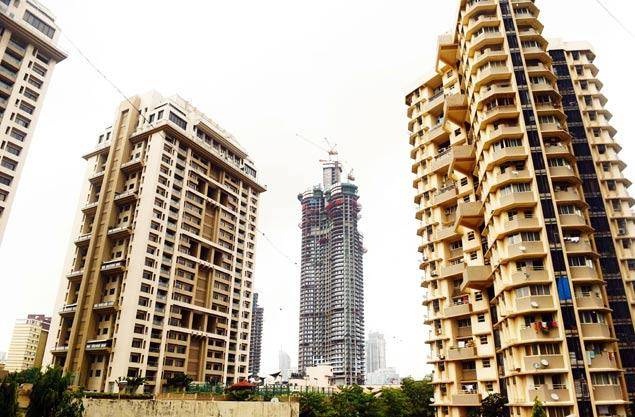
Currently, the permissible height for constructing buildings is upto 40 metre, which can accommodate a 13-storey building. In the proposed DP, the maximum height is 100 metre, which will accommodate a 33-storey building. Such buildings will not only change the skyline of the city, but will boost the vertical growth of the city. It will also help builders and the civic body to provide better facilities.
What are the features of the proposed draft DP?
The current population of the city is around 18 lakh and is estimated to grow upto 34 lakh by the year 2034. The draft DP has been chalked out to accommodate the said population and provide them all the amenities. The new residential zone of 12,835 hectares has been proposed in the draft DP to accommodate the rising population. The basic floor space index (FSI) has been increased from 1 FSI to 1.20 FSI.
What about the regional plans of the districts in the division?
There are five districts under the jurisdiction of the Nashik division. The regional plans of Nashik, Ahmednagar and Jalgaon districts have been approved by the state government. Earlier, there were no plans for Dhule and Nandurbar districts, but the government has now started the process to chalk out plans for these two districts. The existing land use map of Dhule district has been prepared and it has also received approval from the collector. The regional plan for Dhule and Nandurbar districts will be completed in a year.
What is the new zone changing policy?
Earlier, the decision to change the zone of rural areas from residential to commercial or industrial were taken at the Mantralaya-level. From May 6, last year, the government introduced the zone changing policy for the entire state under the regional plan. Now, the powers have been delegated to the divisional revenue commissioner and the limit for 'change in zone' will now be 25 hectares.
Will industries or hotels be allowed in the green zone?
Earlier, there were restrictions on farming land in the regional plans. But, the state government has made a few amendments in the norm. So, one may set up a hotel or an industry in the green zone by getting more premium FSI, which has been increased to 0.50 FSI. The FSI limit for an industry has been increased to 1 FSI.
What are the issues in rural areas now?
Earlier, there were no town planning rules for rural areas as the permission for construction was given by the Sarpanch. This led to an unbalanced development in rural areas. Permissions were also given only till 3 to 4 FSI in rural areas. There was no technical person to look after the process. So, the government has made amendments in the construction permission at the village Panchayat level and the upper hand is given to town planning. The permission for constructions will now be given by the revenue department in consultation with the town planning department.
What is the government policy for 'D' class municipal corporations?
There are four 'D' class municipal corporations in the division - Malegaon, Ahmednagar, Dhule and Jalgaon. Earlier, the development control (DC) rules of each municipal corporation were different. These municipal corporations had approved their separate DC rules along with the DP. Now, the state government has introduced a uniform policy for 'D' class municipal corporations. The TDR will now be applicable to Malegaon and Dhule municipal corporations too. Other DC rules will be uniform for these 'D' class municipal corporations.
Timesofindia.com -
TNN | Aug 27, 2015Full list of 98 smart cities
The government on Thursday released a list of 98 cities, including 24 state capitals, which are to be developed as smart cities.
Here is the list of smart cities released by the government today:
Port Blair, Vishakhapatnam, Tirupati, Kakinada, Pasighat, Guwahati, Muzaffarpur, Bhagalpur, Biharsharif, Chandigarh, Raipur, Bilaspur, Diu, Silvassa, NDMC, Panaji, Gandhinagar, Ahmedabad, Surat, Vadodara, Rajkot, Dahod, Karnal, Faridabad, Dharamsala, Ranchi, Mangaluru, Belagavi, Shivamogga, Hubballi-Dharwad, Tumakuru, Davanegere, Kochi, Kavaratti, Bhopal, Indore, Jabalpur, Gwalior, Sagar, Satna, Ujjain, Navi Mumbai, Nasik, Thane, Greater Mumbai, Amaravati, Solapur, Nagpur, Kalyan-Dombivalli, Aurangabad, Pune, Imphal, Shillong, Aizawl, Kohima, Bhubaneswar, Rourkela, Oulgaret, Ludhiana, Jalandhar, Amritsar, Jaipur, Udaipur, Kota, Ajmer, Namchi, Tiruchirapalli, Tirunelveli, Dindigul, Thanjavur, Tiruppur, Salem, Vellore, Coimbatore, Madurai, Erode, Thoothukudi, Chennai, Greater Hyderabad, Greater warangal, Agartala, Moradabad, Aligarh, Shaharanpur, Bareilly, Jhansi, Kanpur, Allahabad, Lucknow, Varanasi, Ghaziabad, Agra, Rampur, Dehradun, New Town Kolkata, Bidhannagar, Durgapur, Haldia
Timesofindia.com -
17 Jun, 2015“Housing for All by 2022″ Mission – National Mission for Urban Housing
The Union Cabinet chaired by the Prime Minister, ShriNarendraModi, today gave its approval for launch of “Housing for All by 2022” aimed for urban areas with following components/options to States/Union Territories and cities:-
a) Slum rehabilitation of Slum Dwellers with participation of private developers using land as a resource;
b) Promotion of affordable housing for weaker section through credit linked subsidy;
c) Affordable housing in partnership with Public & Private sectors and
d) Subsidy for beneficiary-led individual house construction or enhancement.
Central grant of Rs. one lakh per house, on an average, will be available under the slum rehabilitation programme. A State Government would have flexibility in deploying this slum rehabilitation grant to any slum rehabilitation project taken for development using land as a resource for providing houses to slum dwellers. Under the Credit Linked Interest Subsidy component, interest subsidy of 6.5 percent on housing loans availed uptoa tenure of 15 years will be provided to EWS/LIG categories, wherein the subsidy pay-out on NPV basis would be about Rs.2.3 lakh per house for both the categories. Central assistance at the rate of Rs.1.5 lakh per house for EWS category will be provided under the Affordable Housing in Partnership and Beneficiary-led individual house construction or enhancement. State Government or their parastatals like Housing Boards can take up project of affordable housing to avail the Central Government grant.
The scheme will be implemented as a Centrally Sponsored Scheme except the credit linked subsidy component, which will be implemented as a Central Sector Scheme. The Mission also prescribes certain mandatory reforms for easing up the urban land market for housing, to make adequate urban land available for affordable housing. Houses constructed under the mission would be allotted in the name of the female head of the households or in the joint name of the male head of the household and his wife.
The scheme will cover the entire urban area consisting of 4041 statutory towns with initial focus on 500 Class I cities and it will be implemented in three phases as follows, viz. Phase-I (April 2015 – March 2017) to cover 100 Cities to be selected from States/UTs as per their willingness; Phase – II (April 2017 – March 2019) to cover additional 200 Cities and Phase-III (April 2019 – March 2022) to cover all other remaining Cities. However, there will be flexibility in covering number of cities in various phases and inclusion of additional cities may be considered by the Ministry of Housing & Urban Poverty Alleviation in case there is demand from States and cities and have capacity to include them in earlier phases. Credit linked subsidy component of the scheme would be implemented across the country in all statutory towns from the very beginning.
Dimension of the task at present is estimated at 2 crore. Exact number of houses, though, would depend on demand survey for which all States/Cities will undertake detailed demand assessment for assessing actual demand by integrating Aadhar number, Jan DhanYojana account numbers or any such identification of intended beneficiaries.
A Technology Sub-mission under the Mission would be set up to facilitate adoption of modern, innovative and green technologies and building material for faster and quality construction of houses. The Technology Sub-Mission will also facilitate preparation and adoption of layout designs and building plans suitable for various geo-climatic zones. It will also assist States/Cities in deploying disaster resistant and environment friendly technologies.
The Technology Sub-Mission will coordinate with various regulatory and administrative bodies for mainstreaming and up scaling deployment of modern construction technologies and material in place of conventional construction. The Technology Sub-Mission will also coordinate with other agencies working in green and energy efficient technologies, climate change etc. The Technology Sub-Mission will also work on the following aspects: i) Design & Planning ii) Innovative technologies & materials iii) Green buildings using natural resources and iv) Earthquake and other disaster resistant technologies and designs.
In the spirit of cooperative federalism, the Mission will provide flexibility to States for choosing best options amongst four verticals of the Mission to meet the demand of housing in their states. The process of project formulation and approval in accordance with Mission Guidelines would be left to the States, so that projects can be formulated, approved and implemented faster. The Mission will provide technical and financial support in accordance to the Guidelines to the States to meet the challenge of urban housing. The Mission will also compile best practices in terms of affordable housing policies of the States/UTs designs and technologies adopted by States and Cities with an objective to spread best practices across States and cities and foster cross learning. The Mission will also develop a virtual platform to obtain suggestions and inputs on house design, materials, technologies and other elements of urban housing.
Source- pmindia.gov.in -
 4 March 2015Nashik offers healthy returns on investment
Nashik spans a length of 190 km and is part of the golden triangle along with Pune and Mumbai. The city has come a long way as far as residential development is concerned.
If you are an investor looking to earn handsome returns in the steadily growing realty market of Nashik, then areas such as Gangapur Road, Govind Nagar and Indranagar can be good choices. The main reason behind buyer’s preference for these areas is the rapid development taking place here. Several corporate houses and industrial offices have set base in these upcoming areas.
Abhishek Kumar, a local broker of the area informs, “Gangapur Road, Govind Nagar and Indranagar are witnessing considerable development in terms of social infrastructure and connectivity. However, development of residential properties and availability of varied housing options such as plots, apartments, penthouses, villas and builder floor apartments work as the cherry on the cake”.
The Hindu -
 31 Jul, 2015Mumbai, Nagpur, Nashik among 10 cities to become 'Smart City'
MUMBAI: The Maharashtra government has selected Mumbai, Nagpur and Aurangabad among 10 other cities in the state under the 'Smart City' project, Chief Minister Devendra Fadnavis said today.
Briefing about the selection, Fadnavis said in the Legislative Assembly that a high-level committee under chairmanship of Chief Secretary was set up and Navi Mumbai, Mumbai, Pune-Pimpri Chinchwad, Amravati, Solapur, Nagpur, Kalyan Dombivali, Aurangabad, Nashik and Thane have been selected.
These cities will be developed into smart cities under the NDA government's flagship urban projects while many other Indian cities have been selected under mega Atal Mission for Rejuvenation and Urban Transformation (AMRUT) plan.
The government has proposed to spend around Rs 1 lakh crore on the two schemes over the next five years. While Rs 48,000 crore has been earmarked for 100 smart cities, Rs 50,000 crore are marked for the AMRUT scheme for 500 cities.
Source- economictimes.indiatimes.com